Separable cable accessory with built-in wireless temperature measurement system
Model:
1 / 2
1
2
Description
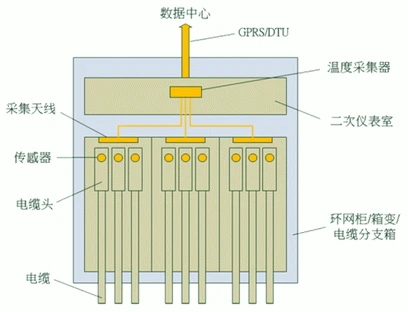
Product Features: 1. World's first, RFID passive sensing temperature measurement. 2. Truly passive: no battery, no CT for power-taking. 3. Digital measurement, digital transmission, CRC error correction. 4. Unique sensor ID, unlimited expansion. 5. MODBUS RTU communication protocol. Passive wireless temperature measurement principle: The temperature collector uses an antenna to emit radio frequency waves, which on one hand activate the sensor to work, and on the other hand transmit the temperature measurement command. After activation, the sensor starts the temperature measurement circuit and sends the temperature measurement result back to the collector. The entire process is digital protocol communication and digital transmission, with CRC check code error correction, making communication stable and reliable. Passive sensor with RFID integrated temperature measurement chip: core micro IC, integrated RFID communication and temperature measurement design, no external temperature sensing components needed, unique ID, ultra-low power consumption enables long-distance reading. Combined with low-power technology and wireless power sensing technology, it achieves passive wireless temperature measurement with no battery, no CT, digital measurement, and digital transmission. It eliminates battery hazards and also solves the weaknesses of SAW temperature measurement, which is susceptible to interference and misreading. Comparison of current temperature measurement technologies:
Features
Product Features: 1. World's first, RFID passive sensor temperature measurement. 2. Truly passive: battery-free, no CT power extraction. 3. Digital measurement, digital transmission, CRC error correction. 4. Unique sensor ID, unlimited expansion. 5. MODBUS RTU communication protocol. Principle of passive wireless temperature measurement: The temperature collector uses an antenna to transmit RF radio waves, which on one hand activate the sensor and on the other hand transmit the temperature measurement command. After activation, the sensor starts the temperature measurement circuit and sends the measurement result to the collector. The entire process uses digital protocol communication, digital transmission, and includes CRC check code error correction, making communication stable and reliable. RFID integrated temperature measurement chip passive sensor: Core micro IC, with integrated RFID communication and temperature measurement design, no external temperature measurement components needed, unique ID, ultra-low power consumption enables long-distance reading. Combined with low-power technology and wireless power sensing technology, it achieves battery-free, CT-free, digital measurement, and digital transmission for passive wireless temperature measurement. It eliminates battery hazards and also solves the weaknesses of SAW (Surface Acoustic Wave) temperature measurement, which is susceptible to interference and misreading. Comparison of current temperature measurement technologies:
Separable cable accessory with built-in wireless temperature measurement system
Model:
Description
Product Features: 1. World's first, RFID passive sensing temperature measurement. 2. Truly passive: no battery, no CT for power-taking. 3. Digital measurement, digital transmission, CRC error correction. 4. Unique sensor ID, unlimited expansion. 5. MODBUS RTU communication protocol. Passive wireless temperature measurement principle: The temperature collector uses an antenna to emit radio frequency waves, which on one hand activate the sensor to work, and on the other hand transmit the temperature measurement command. After activation, the sensor starts the temperature measurement circuit and sends the temperature measurement result back to the collector. The entire process is digital protocol communication and digital transmission, with CRC check code error correction, making communication stable and reliable. Passive sensor with RFID integrated temperature measurement chip: core micro IC, integrated RFID communication and temperature measurement design, no external temperature sensing components needed, unique ID, ultra-low power consumption enables long-distance reading. Combined with low-power technology and wireless power sensing technology, it achieves passive wireless temperature measurement with no battery, no CT, digital measurement, and digital transmission. It eliminates battery hazards and also solves the weaknesses of SAW temperature measurement, which is susceptible to interference and misreading. Comparison of current temperature measurement technologies: